














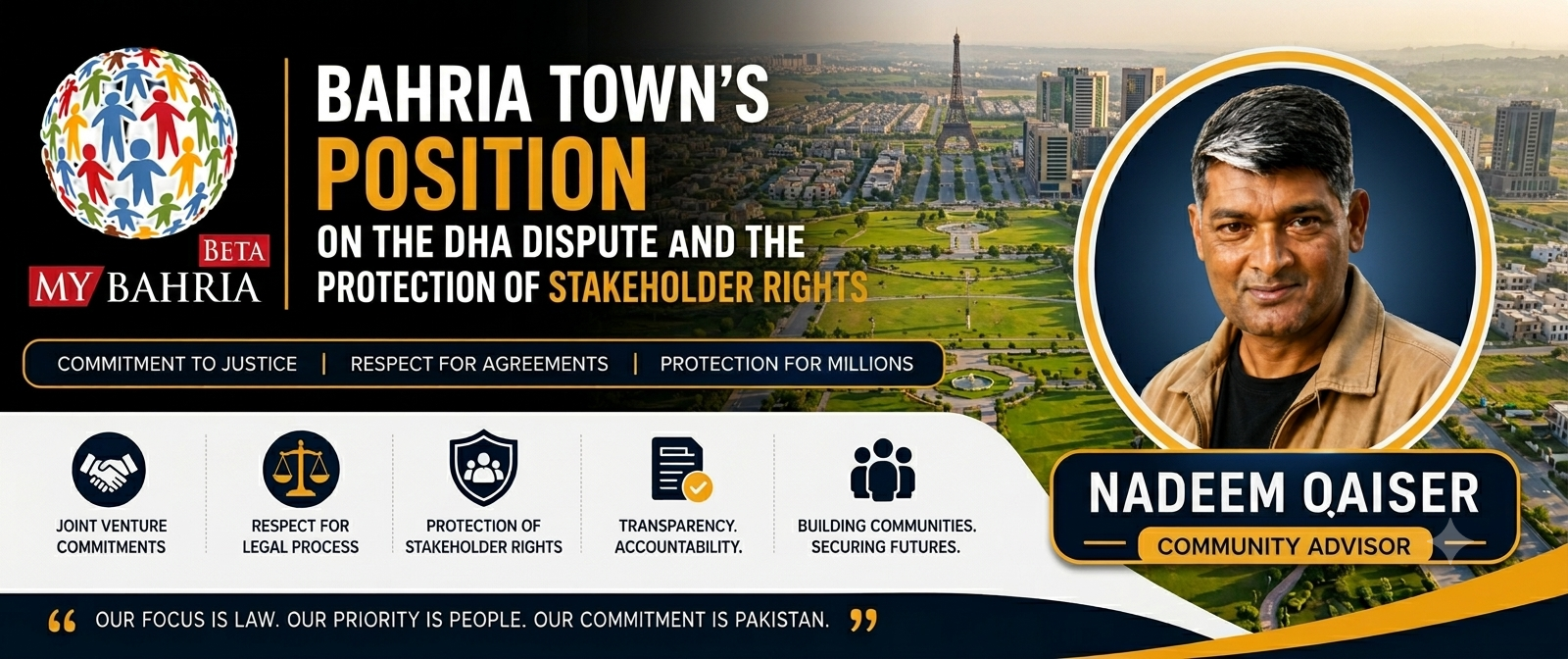
Bahria Town maintains that DHA’s claims against it arise from various joint venture projects, including DHA Valley, DHA Phase II Extension, DHA Expressway, Sector F, Serene City, and associated land holdings. According to Bahria Town, it contributed substantial land, capital, development works, infrastructure, machinery, administrative support, and commercial value to these projects, while DHA failed to fulfill several of its fundamental contractual obligations.
Based on Bahria Town’s financial assessment, as of June 30, 2023, claims amounting to approximately PKR 108 billion were outstanding against DHA in relation to these joint ventures. These claims include land shortfalls, unissued files, retained funds, partnership fees, buyback obligations, profit-sharing entitlements, development charges, cancelled allotments, losses arising from project transfers, and various other financial liabilities.
Bahria Town’s position is that the dispute stems from contractual breaches, non-implementation of Joint Venture Resolution Committee (JVRC) recommendations, unilateral control over joint venture projects, lack of financial transparency, and the denial of Bahria Town’s legal rights. On this basis, Bahria Town seeks financial accountability, arbitration, reconciliation of accounts, adjustment of liabilities, restoration of rights, and compensation for losses in accordance with the law.
Over time, this dispute has evolved beyond historical disagreements and has entered a highly sensitive and critical phase. Bahria Town is currently facing multiple actions directly affecting its assets, properties, vehicles, business operations, and fully developed land holdings. Property seizures, auction proceedings, operational vehicle confiscations, interference with developed land, and restrictions on business activities have collectively placed extraordinary pressure on the organization.
Many of these matters are already pending before competent judicial forums, including the Islamabad High Court and the Supreme Court of Pakistan. Nevertheless, actions affecting ownership rights, possession, development rights, and the interests of purchasers, allottees, third parties, and the general public continue to be undertaken, creating the risk of irreparable harm.
Developments in Bahria Town Phase 8 – June 2026
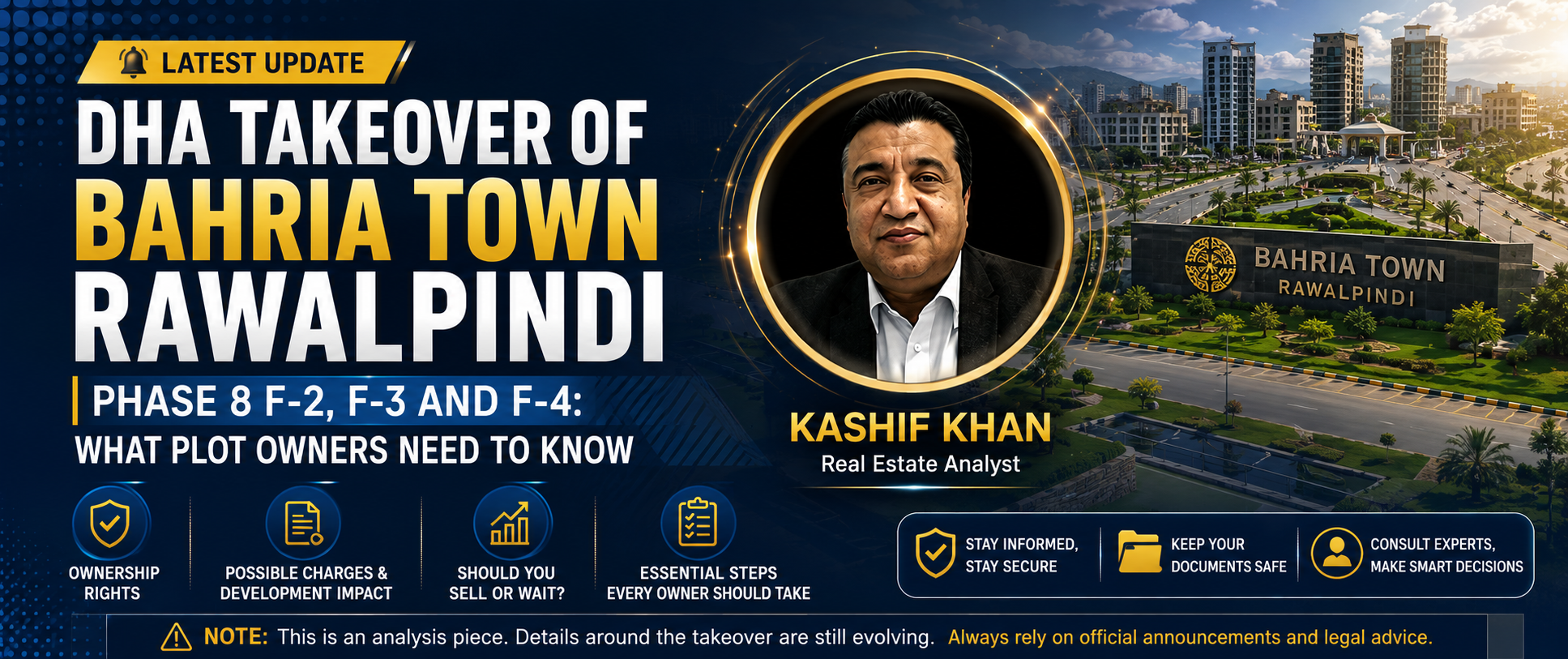
According to Bahria Town, events relating to Bahria Town Rawalpindi Phase 8 in June 2026 have significantly heightened concerns. Bahria Town states that certain DHA officials and representatives entered areas that had long been under Bahria Town’s possession, administration, development, and management.
These were not vacant or undeveloped lands. Rather, they formed part of a fully developed and operational residential community with completed road networks, established infrastructure, utility services, security systems, public amenities, and ongoing residential and commercial activity. Thousands of plots had already been allotted, transferred, and sold. Homes had been constructed, businesses established, and citizens had invested their life savings in these developments.
Bahria Town alleges that fencing and barriers were erected on certain portions of these areas without any final judicial determination, legal demarcation, land acquisition proceedings, or conclusive determination of ownership and possession rights. It contends that allowing such actions to continue would adversely affect not only Bahria Town’s established possession and development rights but also the interests of thousands of purchasers, allottees, third parties, and residents who have invested in these projects over many years.
Bahria Town maintains that the law does not permit any party to cause irreparable harm to another party’s established possession and rights without due legal process and judicial determination, particularly when the matter is already sub judice.
Impact on Residents and Investors
According to Bahria Town, the Phase 8 matter is not merely a land dispute between two institutions. It directly affects thousands of families, investors, business owners, and residents. Through years of allotments, transfers, sales, construction activities, and development works, Bahria Town has created legal and equitable interests for numerous purchasers, allottees, third parties, and members of the public.
Many individuals have completed construction of their homes, numerous families have established permanent residence, investors have committed significant capital, and a wide range of commercial activities depend upon the developed infrastructure in these areas. Any unilateral action, therefore, affects not only Bahria Town but also every citizen who invested in these projects in reliance upon their continued development and stability.
Joint Venture Resolution and Settlement Agreements
The recommendations of the Joint Venture Resolution Committee subsequently formed the basis of the Settlement Addendum dated September 18, 2018, and the Final Settlement Agreement dated November 27, 2018. These agreements were intended to bring a permanent resolution to years of disputes.
They established a comprehensive framework for transparent governance, financial reconciliation, effective oversight, structured reporting, and enforcement of mutual obligations. Bahria Town accepted these agreements as a roadmap for future cooperation, with the expectation that historical disagreements would be resolved through a transparent and mutually agreed system.
The JVRC review concluded that the joint ventures had collectively generated approximately PKR 81.44 billion in revenue. Detailed assessments were conducted concerning land values, development expenditures, administrative costs, liabilities, retained funds, unadjusted expenses, and other financial matters.
Bahria Town asserts that these figures demonstrate not only that it fulfilled its obligations but, in many instances, invested beyond them. It further contends that DHA also incurred obligations under various categories and that the financial records establish Bahria Town’s role as a major investor, developer, and financial contributor whose efforts generated substantial benefits for DHA.
Benefits Accruing to DHA
According to Bahria Town, DHA benefited directly or indirectly from Sector F, Business Bay, Defence Villas, DHA Valley, DHA Expressway, membership fees, transfer fees, development charges, commercial plots, public amenity plots, reserved project funds, advance profits, Serene City, Adiala Road land holdings, and numerous other project components.
Additionally, roads, connectivity infrastructure, planning, and development works undertaken by Bahria Town significantly enhanced the value of DHA’s projects. Bahria Town maintains that DHA derived substantial benefits from these developments while not contributing proportionately to the associated investment and development costs.
Alleged Non-Implementation of the 2018 Settlement Agreements
Although the 2018 Final Settlement Agreements were intended to conclusively resolve disputes between the parties, Bahria Town alleges that DHA did not fully implement them in their true spirit.
Meetings of the Steering Committee established under the agreements were not held regularly, and the committee did not effectively perform its oversight and decision-making functions. The joint venture management company gradually came under unilateral control, and Bahria Town alleges that it was denied access to information relating to financial status, project progress, expenditures, assets, balance sheets, financial irregularities, and major decisions.
Bahria Town contends that these breaches were not merely technical in nature but undermined the very foundations of transparency and mutual trust. It cites concerns regarding management appointments, dismissal of experienced personnel, marketing policies, land acquisition, financial transactions, audits, legal matters, and project administration that allegedly departed from the spirit and intent of the settlement agreements.
Financial Transparency Concerns
Bahria Town identifies the lack of financial transparency as one of the most serious issues. Following the 2018 agreements, substantial funds were received by the joint venture company, including investments provided by Bahria Town and revenues generated through project operations.
However, Bahria Town alleges that complete and transparent details regarding the utilization of these funds, expenditures, revenues, assets, and financial reconciliations were not provided. Consequently, it found itself in a position where it continued to shoulder obligations and liabilities while lacking effective oversight and control over the projects’ financial and administrative affairs.
Human and Economic Impact
An important human dimension underlies the current situation. Bahria Town is not merely a corporate entity; millions of residents, employees, contractors, shopkeepers, teachers, doctors, security personnel, sanitation workers, technical staff, and their families are connected to its operations.
Vehicles that are seized or interfered with are not simply commercial assets; they are used to provide security services, sanitation operations, emergency response, firefighting, waste management, park maintenance, community services, and day-to-day administration.
Similarly, the seizure or auction of developed properties does not affect Bahria Town alone. It impacts the broader economic and social ecosystem that has developed around these communities over many years.
Bahria Town’s Legal Position
Bahria Town emphasizes that it is not seeking immunity from the law, nor does it oppose accountability or legal scrutiny. Its position is that all disputes should be resolved through competent courts, legal demarcation, examination of revenue records, arbitration, reconciliation processes, settlement mechanisms, and implementation of agreed contractual arrangements.
Until the final determination of rights and liabilities, Bahria Town argues that no irreversible action should be taken that could prejudice established possession, pending judicial proceedings, developed land, or the rights and interests of purchasers, allottees, third parties, and the public.
According to Bahria Town, the rule of law requires fairness, impartiality, and respect for contractual commitments. It maintains that the contributions, investments, and role of each party should be recognized; that mutually agreed settlements should be honored; and that disputes should be resolved through lawful forums rather than unilateral actions.
Call for a Lawful and Transparent Resolution
Bahria Town states that it remains prepared to cooperate fully with all state institutions. It is willing to provide records, assist in fact-finding, participate in reconciliation and arbitration, submit to legal scrutiny, and comply with decisions of competent forums.
Its objection, it says, is not to accountability or law enforcement, but to unilateral, coercive, and irreversible measures undertaken before a final determination of rights. Bahria Town calls for the law to take its course, for records to be transparently examined, for settlement agreements to be respected, and for the rights of the many citizens affected by this dispute to be protected.
Ultimately, Bahria Town argues that this dispute is no longer merely about files, accounts, plots, or contracts. It has become a matter concerning the sanctity of agreements, the supremacy of legal process, and the preservation of public confidence. It raises the fundamental question of whether a party that invested in good faith, developed infrastructure, and created value can be deprived of its rights without due process of law.
Bahria Town respectfully submits that the present crisis should be resolved through justice, transparency, and the rule of law. It advocates maintaining the status quo on developed land, conducting lawful demarcation through competent revenue authorities, undertaking transparent financial reconciliation, implementing JVRC recommendations and settlement agreements, protecting the rights of purchasers and residents, and resolving all pending disputes through competent judicial forums.
Any action involving possession, development activities, auctions, seizures, or interference with stakeholder rights before final adjudication, Bahria Town contends, risks causing irreparable harm.
In the final analysis, history will judge this dispute not by the exercise of power, but by the transparency, legality, and fairness of the process adopted. Bahria Town states that it dedicated its land, capital, development expertise, and reputation to revitalizing projects that required support, fostering public confidence, generating economic activity, and building thriving communities. Today, it seeks only that its rights—and the interests of the millions of citizens connected to these developments—be protected in accordance with the law.